The Pause in the Mug: What a Herbal Tea Break Is Actually Doing for You
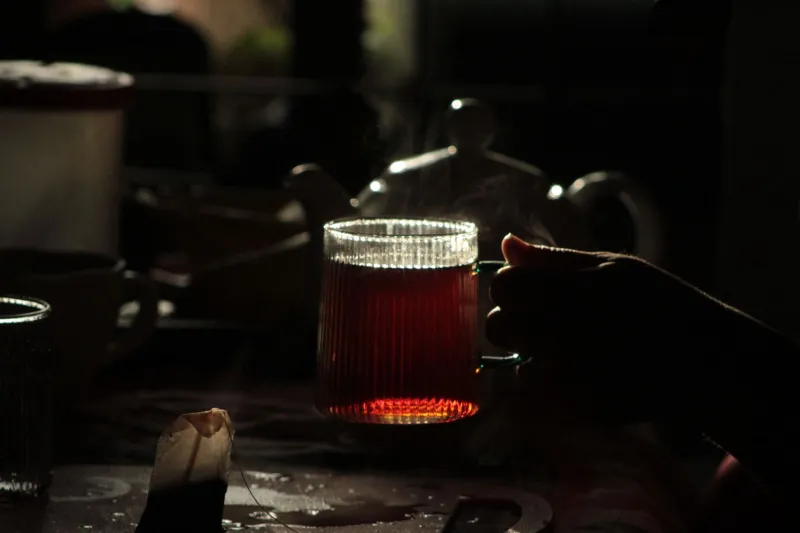
I have come to suspect that the most reliable active ingredient in a herbal tea is the eleven minutes you spend not doing anything else.
That is not a sneer at the plants. It is just where the honest evidence tends to land. So this is an argument for the tea break as a break — warmth, ritual, a small defended pocket of time — with the herbs as willing accomplices rather than miracle workers.
The week I started counting
Somewhere in a grim February I noticed I was drinking four coffees before lunch and eating at my desk. I swapped the third coffee for a mug of peppermint tea, not out of virtue but because I like the taste. What changed was not my digestion particularly. What changed was that I stood up, walked to the kitchen, waited for the kettle, and sat down for a few minutes with nothing in my hands but a mug.
That is a behavioural observation, not a pharmacological one, and I think it is the more interesting of the two.
Taking the plants seriously without overselling them
Chamomile is the one everyone reaches for. There is a reasonable body of small trials on chamomile and sleep quality or mild anxiety, but the studies are short, often small, and use different preparations — capsules, extracts, infusions. The traditional use for mild nervous tension and to aid sleep is well established. The honest summary: a cup is a gentle, plausible part of a wind-down routine, not a sedative.
Peppermint has its best evidence in enteric-coated oil capsules for irritable bowel syndrome, which is a very different thing from a teabag. As a drink it is soothing and pleasant, and menthol does relax smooth muscle — but it can also loosen the valve at the top of the stomach and make reflux worse. If heartburn is your issue, this is not your herb.
Ginger has genuinely decent evidence for nausea, including in pregnancy, though the tea dose is lower than trial doses. It is warming and useful after a heavy meal. Check with a pharmacist if you take anticoagulants, and be cautious with gallstones.
Fennel is the traditional after-dinner digestive, and the evidence base is thin — mostly traditional use for bloating and wind. It is pleasant with a little honey. High doses over long periods are best avoided, and fennel is not recommended for infants outside a clinician's advice.
Notice the pattern? Warm, aromatic, mildly bitter or sweet plants that taste good and are well tolerated. That is a fine reason to drink them.
The pause is doing more than we admit
When I looked at my own week, the tea break was carrying several things at once. A reason to stand up. A reason to stop looking at a screen. Warm fluid, which many of us simply do not drink enough of in winter. A small, repeatable ritual with a beginning and an end — which is the sort of thing that quietly structures a shapeless day.
I am wary of dressing this up in neuroscience. But the plain version stands: if the choice is between no break and a break with a decent-tasting hot drink, the break wins. The herb is the invitation, not the entire event.
There is also something to be said for the physical fact of holding a warm mug. In a cold-flat, dark-at-four British winter, that is not nothing.
Reading a blend without swallowing the hype
Herbal tea shelves are a masterclass in suggestion. A few practical habits:
- Turn the box over. Ingredient order is by weight. If the first ingredient is apple pieces or hibiscus, you have bought a fruit tea with a whisper of chamomile, not a chamomile tea.
- Look for grams. 'Blended with soothing botanicals' tells you nothing. Twelve grams per teabag tells you something.
- Be sceptical of the word detox. Herbal teas do not detox anything; your liver and kidneys have that covered.
- Check for hidden stimulants. Green tea, matcha, yerba maté and guarana all contain caffeine and turn up in 'herbal' blends aimed at energy.
- Watch for senna and liquorice. Senna is a laxative and not something to drink daily; liquorice raises blood pressure in some people, especially at high intakes or over long periods.
- Mind your teeth. Fruit and berry infusions are often acidic enough to soften enamel. Rinse with water afterwards rather than brushing straight away.
- A THR logo and number means a Traditional Herbal Registration, a licensed standard of manufacture. It is not a proof of efficacy, but it is a sign of quality control.
Safety flags worth knowing before it becomes a habit
The pleasantness of herbal tea can lull you into thinking it is entirely without effect. Mostly it is very safe. A few things merit a moment's thought.
Pregnancy and breastfeeding. Ginger is generally considered acceptable for nausea in pregnancy at food-to-moderate levels, but check with your midwife. Avoid blends with liquorice, senna, and concentrated sage or rosemary. Keep to ordinary amounts of chamomile and peppermint.
Medication. Chamomile may interact with warfarin and with sedatives; ginger with anticoagulants; peppermint may affect how some drugs are metabolised. If you take regular medication — particularly blood thinners, thyroid medication, lithium or anything sedating — ask a pharmacist before making a strong herbal infusion a daily habit.
Digestive sensitivity. Peppermint can worsen reflux. Chamomile is a common allergen for people with ragweed or daisy-family allergies. If you are managing IBS or following a low-FODMAP approach, strong fennel and chamomile infusions are worth introducing one at a time rather than all at once.
More is not better. One or two cups a day is the sensible territory. A litre of concentrated fennel infusion is not an upgrade.
The cup you actually drink
So here is my quiet case. Buy a tea you genuinely like the taste of, make it in a mug you enjoy holding, and sit down for it. Let it be a small, defended boundary in the middle of an overfull day. If the chamomile helps you drift off, lovely. If the peppermint settles you after dinner, good. If none of that happens and you simply had a quiet eleven minutes with a warm drink, you have still had the better half of the bargain.
A cuppa, not a cure. That seems like a reasonable thing to ask of a teabag.