The Spike and the Soother: A Practical Guide to Stinging Nettle
Stinging nettle is one of those plants most of us learn about the hard way. It lurks in hedges, allotment corners and the back of the garden, and it has a talent for finding bare ankles. Yet the same plant has been eaten, brewed and applied in British herbal traditions for centuries. So is it worth a fair hearing, or is the folk reputation doing more work than the evidence?
The honest answer sits somewhere in the middle. Nettle is a useful, genuinely interesting plant — but it is not a miracle weed, and it should not be treated as a replacement for proper medical care. Think of it as a modest kitchen and tea-shelf botanical with a few cautious traditional uses, rather than a cure-all with stings.
First, the sting is only part of the story
The nettle’s bite comes from tiny hollow hairs on the leaves and stems. When you brush against them, they break and release a mixture that includes histamine and formic acid, among other irritants. That is why the sting can feel sharp, itchy and oddly persistent. It is also why gloves are non-negotiable when harvesting.
Heat, drying and cooking destroy the sting. That simple fact explains why nettle has long been treated as a spring vegetable in the UK. Young tops were once a familiar sight in soups and puddings, and nettle tea has remained a steady presence in herbal cabinets. The old language around nettle often leans on ideas like ‘blood cleansing’ or ‘purifying’. Those phrases belong more to historical herbalism than to modern physiology. It is better to talk about nettle as a nutritious edible plant and a traditional herbal infusion with some areas of research interest.
What the evidence can honestly support
Nettle leaf is not short of laboratory interest, but human evidence is smaller and more mixed than the internet sometimes suggests. That does not make it useless. It just means we need to keep our expectations proportionate.
As a food, nettle is genuinely nutritious. Young leaves provide useful amounts of vitamins and minerals, including vitamin C, calcium and iron, along with plant protein. That is a good reason to enjoy it in soup or a savoury bake. It is not a reason to claim it will fix low iron on its own — iron from plants is absorbed less readily than iron from animal sources, and suspected anaemia needs proper testing.
For joint comfort, nettle leaf has been studied in osteoarthritis, often in herbal combinations rather than as a single ingredient. Some trials suggest possible benefit, but they tend to be small or short, and the evidence is not strong enough to promise a result. If you have arthritis, nettle tea may sit alongside your usual care; it should not replace prescribed treatment or make you delay a diagnosis.
Hay fever is another traditional use. Some people find nettle tea soothing during the season, and there has been limited research into nettle extracts for allergic rhinitis. The results are not conclusive. If you are reaching for nettle instead of your antihistamine or nasal spray, that is the point to pause and speak to a pharmacist.
Nettle root is a separate herbal medicine with its own research area, mainly around urinary symptoms in older men. That is not the same as nettle leaf tea, and it is not something to self-treat. Persistent urinary symptoms, swelling, breathlessness or unexplained pain need medical assessment.
Harvesting nettle in the UK without regrets
Spring is the best time for nettle foraging. Look for young, tender tops before the plants flower. Older leaves become gritty and less pleasant, and once nettles are flowering it is generally better to leave them alone for eating.
Wear sturdy gloves and use scissors. Pick only the top few leaves of a healthy plant, leaving plenty behind. Avoid roadside verges where exhaust pollution collects, dog-walking spots, sprayed ground, railway land and protected nature reserves. Always seek permission if you are not on your own land, and never dig up roots without the landowner’s consent. In the UK, foraging for personal use is not a free-for-all; local bylaws and conservation rules still apply.
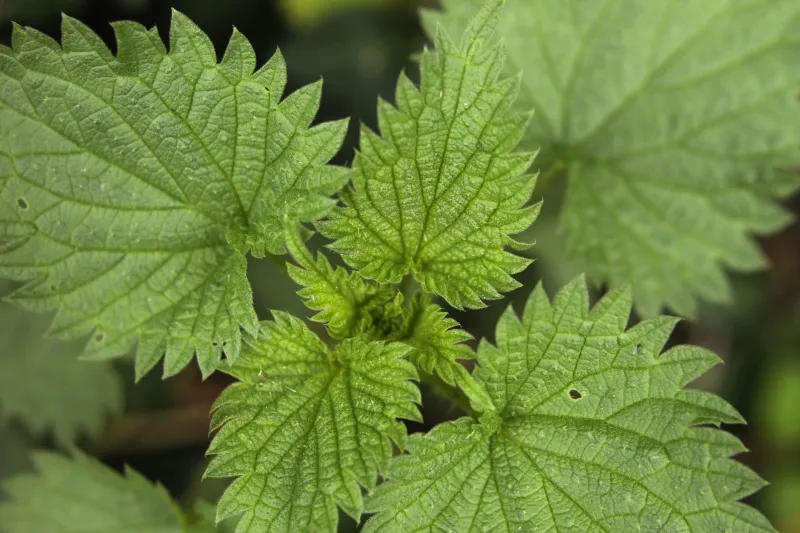
Make sure you have the right plant. Common stinging nettle, Urtica dioica, has a square-ish stem and serrated leaves that sting. Dead-nettle looks similar but does not sting and is a different plant. If you are new to foraging, go with someone experienced or use a reliable field guide rather than an app alone.
From sting to supper
Once picked, rinse the nettles and cook them. Blanching for a minute or two is enough to remove the sting. From there, nettle works well in soup with potato and leek, folded into a frittata, or blitzed into a punchy pesto. Do not eat it raw. It is not a salad leaf, and the sting is the least of the reasons to cook it properly.
For tea, use about one to two heaped teaspoons of dried nettle leaf per mug of freshly boiled water. Cover and steep for five to ten minutes, then strain. If using fresh leaf, a small handful is plenty. Start with one cup rather than a whole pot, and see how you feel. Nettle tea is mild but not nothing; more is not automatically better.
Dried nettle keeps best in a sealed jar away from light and heat. Fresh leaves can be blanched and frozen in portions. As with any foraged food, wash thoroughly and discard anything that looks damaged or mouldy.
Safety and who should pause
Nettle is generally well tolerated as a food and a mild tea, but it is not suitable for everyone. If you are pregnant or breastfeeding, avoid medicinal doses and concentrated extracts unless a qualified healthcare professional has advised otherwise. Children should not be given herbal extracts without advice; small amounts in cooked food are a different matter.
Take care if you have kidney problems, heart failure or low blood pressure, or if you take diuretics, blood-pressure medicines, diabetes medicines, anticoagulants or lithium. Nettle may affect blood pressure, blood sugar and urine output, and it can interact with medication. If you take regular prescriptions, ask a pharmacist before using nettle regularly as a herbal tea or supplement.
Stop if you develop a rash, stomach upset, dizziness or any unexpected reaction. And do not use nettle to self-treat swelling in the legs, breathlessness, urinary problems or long-running joint pain. Those symptoms deserve a proper conversation with a GP or pharmacist.
A sensible place on the shelf
Stinging nettle earns its place as a spring green, a comforting tea and a small example of how familiar plants can be both ordinary and useful. It does not need to be exaggerated to be worth knowing. Harvest it carefully, cook it properly, keep the dose modest and let the evidence — rather than the folklore — set the tone. The nettle in the hedge is not a medicine cabinet in disguise. It is a good plant to understand, handle with gloves and enjoy without overpromising.