The Hot Water Bottle and the Tea Mug: A Level-Headed Guide to Herbs for Period Cramps
Photo: Gaurav Dhwaj Khadka, CC BY-SA 4.0, via Wikimedia Commons
Period cramps can turn a normal day into a sofa day. It is understandable to want something warm, gentle and easy while you wait for the worst of it to pass. Herbal teas and blends often end up in that role, and there is nothing wrong with that, as long as we keep our expectations honest.
This is not a cure guide. It is a calm look at the botanicals UK readers most often reach for during menstrual cramps, what the evidence can and cannot tell us, and when a mug of tea should sit alongside conventional care rather than instead of it.
Start with the basics
Period pain, or primary dysmenorrhoea, is usually linked to prostaglandins, chemicals that make the uterus contract. Heat, rest, gentle movement if it feels possible, and over-the-counter pain relief such as paracetamol or ibuprofen, if suitable for you, remain the mainstays for many people. A pharmacist can advise on which option fits your circumstances.
A warm drink will not switch off that process. But warmth, a pause and a few minutes off your feet are real comforts. Herbal tea can be part of that comfort routine without being sold as a treatment.
Ginger: the most promising of the bunch
Ginger is probably the botanical with the most encouraging research behind it for period pain. Some small trials have suggested that ginger may reduce cramp intensity, sometimes compared with placebo or with standard pain relief. The studies are not large or uniform enough to make it a sure thing, and results vary. Still, it is a reasonable first stop for many people.
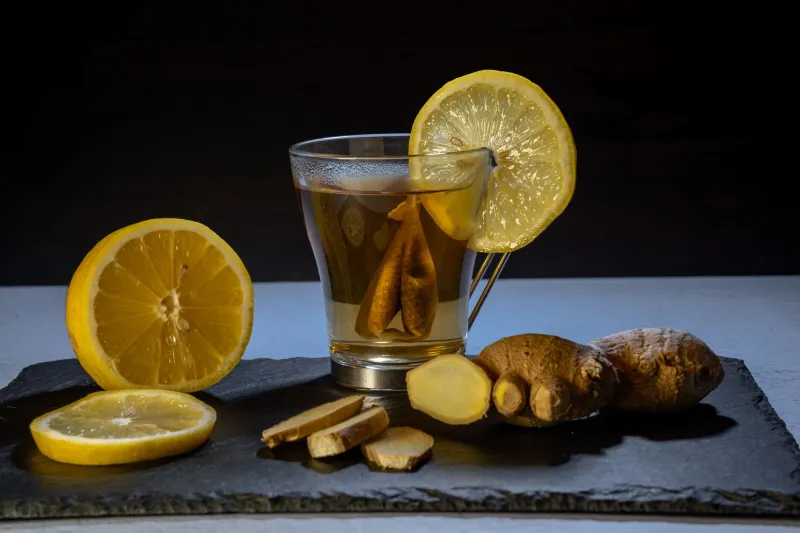
Fresh ginger tea is simple. Slice one to two centimetres of fresh root, pour over freshly boiled water, and steep for five to ten minutes. A decent-quality tea bag is fine too. Ginger can cause heartburn in some people, and it may interact with blood-thinning medicines such as warfarin. If you take regular medication or have gallstones, check with a pharmacist before making it a daily habit.
Chamomile: gentle, but not a painkiller
Chamomile has a long tradition as a soothing, antispasmodic herb. That traditional use is why it appears in so many period blends. Direct evidence for chamomile easing menstrual cramps is limited, though, so it is better thought of as a calming cup than a targeted pain remedy.
It is a pleasant option in the evening, when cramps and a low mood tend to arrive together. Use about a teaspoon of dried flowers per mug, cover the cup while it steeps for five minutes, and drink it warm. People with allergies to the daisy family should be cautious. Chamomile may also interact with sedatives and blood-thinning medication, so usual safety checks apply.
Raspberry leaf: tradition versus evidence
Raspberry leaf is one of the most familiar herbs in the period-tea aisle. It has a long history in Western herbalism, often framed as a uterine tonic. That tradition is real, but robust evidence that it relieves period pain is thin. It is not a herb to treat as a guaranteed fix, and it is not suitable during pregnancy without professional advice.
If you want to try it, a standard infusion is one to two teaspoons of dried leaf per mug, steeped for around ten minutes. Some people find it slightly astringent and bitter. Stop if it upsets your stomach. If there is any chance you could be pregnant, avoid concentrated raspberry leaf products and speak to a GP or pharmacist first.
What about the blends?
Supermarket and health-shop period blends often contain several herbs at once: chasteberry, dong quai, black cohosh, wild yam, lemon balm or fennel. Some are included for tradition, some for plausible mechanism, and some because they sound reassuring on the box. The evidence for most combination products is modest, and the more herbs in the blend, the harder it is to know what is doing what.
Read the label properly. Look for a Traditional Herbal Registration mark if you are buying a licensed herbal medicine in the UK, and buy from a reputable supplier. Black cohosh has been linked to rare liver problems, and dong quai may increase bleeding risk. These are not reasons to panic, but they are reasons to avoid stacking several products and to ask a pharmacist if you take prescription medicines.
Making a sensible cup
A few practical habits make herbal tea more enjoyable and less fiddly. Use about one teaspoon of dried herb or one tea bag per mug, give it five to ten minutes, and cover the cup while it steeps if you want to keep the aromatic oils in. There is no need to make it stronger than the label suggests. Two or three cups across the day is a common-sense range for most simple teas.
Try not to treat the tea as a test of willpower. If it tastes unpleasant, you will not drink it, and that is fine. Ginger with a little honey, chamomile on its own, or a mild raspberry leaf blend are all reasonable starting points.
Safety and interactions
Herbs are not automatically gentle just because they are plants. Ginger can affect bleeding risk. Chamomile can add to sedation. Raspberry leaf is not for pregnancy without advice. Blends may contain herbs that interact with hormonal treatments, blood thinners, diabetes medicines or blood pressure drugs. If you take regular medication, are breastfeeding, or have a liver condition, get personalised advice from a pharmacist or GP.
Stop any herb that brings on a rash, stomach upset, unusual bleeding or another new symptom, and mention it to a healthcare professional.
When to speak to a GP
Period pain is common, but it is not something you simply have to endure. Book a GP appointment if the pain is severe, getting worse, or not helped by over-the-counter options. Also seek advice if you have pain during sex, heavy bleeding that soaks a pad every hour, fever, fainting, bleeding between periods, or a sudden change in your usual pattern. Pain that starts later in life, or that comes with bowel or bladder symptoms, deserves a conversation too. These can be signs of conditions such as endometriosis or fibroids, and they should not be dismissed.
The honest middle ground
A hot water bottle, a warm mug and a quiet ten minutes are not a replacement for proper medical care. They are small comforts that can sit alongside it. If ginger tea helps you feel a little more human while you wait for pain relief to work, that is a useful thing. If it does not, that is not a failure. Herbs are modest tools, not miracles, and the kindest approach is to use them with clear eyes, a sensible dose and a low threshold for asking for help.